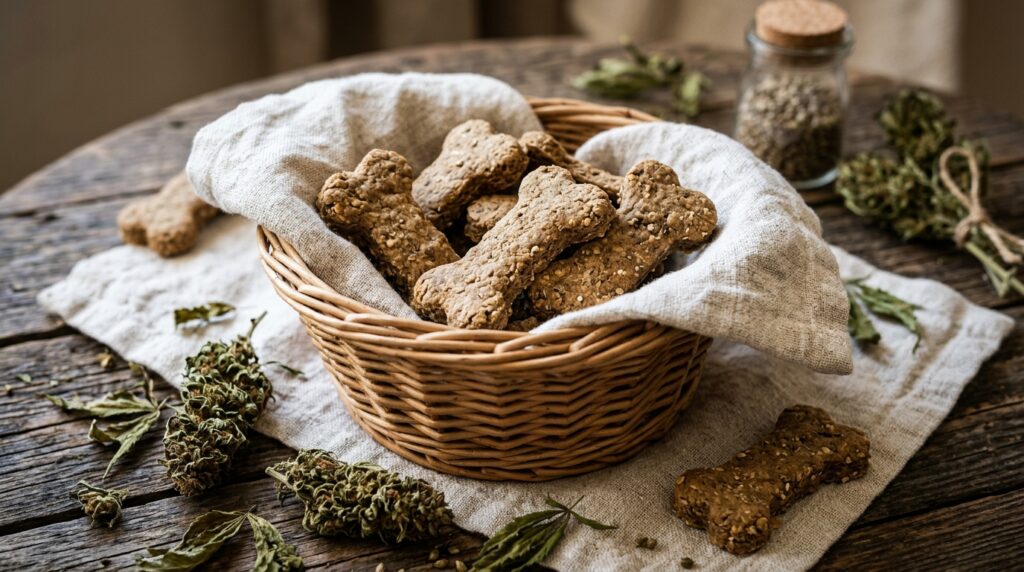
A bag on the shelf says 300 mg. Another says 600 mg. A third says “hemp power” in large type and lists no milligrams at all. Which one holds more CBD per treat, and which one holds any at all?
Pet owners ask that question at the register more often than manufacturers would like. CBD dog treats come with labels that mix marketing language, chemistry terms, and numbers that only mean something after a bit of arithmetic.
This guide works through a label from top to bottom, with a worked dose example, a comparison table, and a short list of red flags.
The Front of the Bag
Three Product Types
The words “full-spectrum,” “broad-spectrum,” and “isolate” describe the cannabinoid makeup, and they do not describe strength.
| Type | What it contains | THC |
|---|---|---|
| Full-spectrum | CBD plus other hemp compounds | Trace amounts, up to 0.3% in the plant |
| Broad-spectrum | CBD plus other compounds | Removed or below detection |
| Isolate | CBD only | None |
Dogs react to THC more strongly than people do, so owners with sensitive pets often look at the THC column first. A full-spectrum label is not unsafe on its own, but the lab report should show the actual THC number.
Hemp Oil Versus Hemp Extract
Here is where a lot of confusion starts. Hemp seed oil is pressed from seeds and contains little to no CBD. CBD comes from the flowers, leaves, and stalks, and labels usually call it hemp extract, cannabidiol, or CBD. A bag that lists only “hemp oil” and a big milligram number should be read twice.
Dose Math, Step by Step
Most labels list total CBD for the bag and a treat count. Dividing one by the other gives the amount per treat.
Take a bag with 300 mg of CBD and 60 treats. That works out to 5 mg per treat.
Now picture a 20-kilogram dog. The Cornell osteoarthritis trial used 2 mg per kilogram twice a day, which comes to 40 mg per dose for that dog. At 5 mg per treat, that means eight treats at a time, or sixteen a day.
The calculation shows how far typical treat strengths sit from study dosing. It also shows why a vet’s input matters, since a dog’s weight, health, and other medications all change the picture. Several factors beyond the label figure apply here.
The Back Panel and the Lab Report
Where the COA Fits
A certificate of analysis (COA) is a document from a testing lab that reports what a specific batch contains. A QR code on the bag often leads to it. The lab should be accredited to ISO/IEC 17025.
What a Good Report Lists
- Cannabinoid profile, with CBD and THC in milligrams per gram or percent
- Batch or lot number matching the bag
- Test date and lab name
- Contaminant panels: heavy metals, pesticides, solvents, and microbes
The FDA has run its own checks as well. Lab testing of products named in earlier FDA warning letters found some contained little or no CBD, which supports the case for reading the report instead of trusting a headline number.
Red Flags Worth Spotting
Some problems show up before the bag is opened.
- Claims to treat or cure a disease, which the FDA has not approved for any pet product
- No milligram amount per treat
- A COA that is missing, outdated, or tied to a different batch
- No ingredient list, or one containing xylitol, chocolate, or raisins
- Prices far below the rest of the shelf
Short FAQ
What does “mg” on the front mean?
It usually means total CBD in the bag, but some brands print the per-treat figure. The back panel clarifies which.
Is a higher number always better?
No. A larger number only matters if the dog’s size, vet advice, and tolerance support it.
Should the COA match every bag?
It should match the batch printed on the bag. Reports for older batches do not describe a new one.
Final Thoughts
A label tells only part of the story, and the lab report fills in the rest. Dividing total milligrams by the treat count takes thirty seconds and makes every product on the shelf easier to compare.